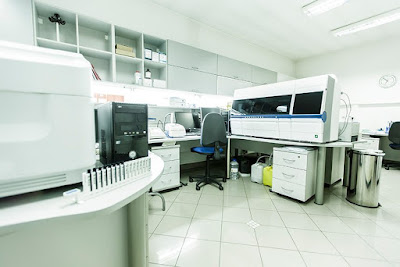
Showing posts with label lab workstation. Show all posts

Monday, 14 September 2020

Choosing the Right Material for Your Lab Workstation

If you work in a lab, you know how vital it is to have the right equipment. After all, how can you finish anything on time if you don’t have the proper materials? One of the most important things you need to have in your laboratory is one or more laboratory workstations. What can you possibly do without somewhere to place your equipment? Here at Catalina Laboratory Products, we specialize in high quality and affordable lab furniture like workstations. We believe that quality products shouldn’t be reserved for the most well funded labs, so our catalog is full of premium furniture at an affordable price. Here are a few things to keep in mind when you’re choosing your lab workstation.

What Material Should I Choose?

The kind of workstation you decide on will obviously be based on the kind of lab that you’re running. A chemical lab, for example, will require something with a solid surface that can hold up to spillage from your experiments.

Continue Reading

Monday, 18 May 2020

Why is Laboratory Casework So Important?


Any lab is designed for the purpose of doing design, research, or investigations in a controlled environment. In many cases, people are relying on the preciseness of the experiments in order to design new products, medications, equipment, or materials for people to use to make their lives better. Because a laboratory requires precise measurements, the furniture in labs have to be multipurpose. Both laboratory work benches and laboratory casework are vital for lab operations to run smoothly.

The Multipurpose Features of Lab Equipment

Every lab, no matter what their purpose, is designed to conduct experiments. Often, multiple people are working in the same lab, so space is at a premium. Laboratory work benches represent the area where designs or experiments are done. Some laboratory work benches look like large tables, while others look like a desk with shelving. Laboratory casework is a series of cabinets used for storage. The casework may be a large standalone cabinet, or it may be located above a workstation.

Thursday, 25 April 2019

Benefits of an Adjustable Laboratory Workstation


Research has found a connection with sitting for extended periods of time and numerous health conditions, such as obesity and metabolic syndrome which is defined as a cluster of conditions occurring together that increase your risk of stroke, heart disease, and type 2 diabetes. Included in these conditions are increased blood sugar, increased blood pressure, abnormal triglyceride or cholesterol levels, and extra body fat around the midriff area. Sitting for long periods of time also can result in chronic back pain and increase the risk of death from cancer and cardiovascular disease.

A possible answer to this growing concern hydraulic adjustable laboratory workstations and benches. A lab workstation must be designed for a demanding environment while maintaining efficiency and productivity.

Sitting All Day Can Be Harmful

Any extended sitting, such as behind the wheel of your car or behind a desk at work can be harmful. Furthermore, engaging on moderate or vigorous activity or spending many hours at the gym does not significantly balance the risk according to Dr. James Levine, the obesity expert.


Tuesday, 16 April 2019

Benefits of Stainless-Steel Lab Cabinets


Laboratories are not all identical. There are some with basic requirements, Electro Static Dissipative requirements, or clean room requirements. Still, there are some labs that require microbial protection or sterilization processes for the work they do. Specialized laboratory furniture is required for these labs. In these laboratory environments, stainless steel lab wall cabinets and furniture are the “must have” option. The reason this material is considered a go-to choice for these labs is the unique properties it provides making it the perfect fit.

Top Benefits of stainless steel Include:

Fungal and Bacterial Resistance


Stainless steel lab wall cabinets have a non-porous work surface, which means that no fungus, mold, bacteria, or liquids can penetrate it. There is nowhere for fungi, bacteria, and dirt to hide. When practicing regular routine sanitation processes, there is a significant reduction in the risk of cross-contamination or germs spreading.


Wednesday, 3 April 2019

Make Your Laboratory More Effective with Lab Casework


The best laboratory furniture will help improve lab research; meaning, a key to excellent lab work is a well-furnished lab. Essential elements of a highly productive work environment include furniture pieces such as stainless-steel utility carts, workbenches, and fume hood, however, it would be hard to consider a lab without the necessary casework and laboratory cabinets. Purchasing regular cabinets are simpler, finding the ideal lab casework can be a time-consuming job, as there are a number of significant factors you will have to consider.

The Answer to a Functional Work Space is with Laboratory Casework


Laboratory casework has now become a requirement any efficient workplace. As lab tasks can be tedious, these tasks can be accomplished faster with assembled lab equipment. Subject to the unique requirements, an assortment of laboratory casework options are available. In fact, there are some manufacturers that provide customized solutions to ensure you always get the right fit. Whatever the case may be, lab casework and cabinets are crucial elements of a workplace and to ensure best results it is necessary to make an informed decision.


Sunday, 24 March 2019

Creating a Smart Work Bench


It has often been said that a messy work bench is a clear sign that a scientist is at work. While this is a true statement, it is more beneficial to learn how to have a smart work bench, one that is organized and laid out properly. The work day will be more enjoyable and less prone to errors, as you will have an organized area in which to complete your daily tasks. It takes time and energy, but once you figure out how to create a work bench that functions smartly, you will find the day runs smoother than ever before!

Starting Tips

To begin, it is important to set up your work bench in the right manner. This will include keeping the tools on the side of the bench where your dominant hand rests. This creates easy access. So, if you are left-handed, choose the left side for your tools.


Sunday, 16 December 2018

Science Lab Sinks: How They Are Different Than the Standard Household Sink

Science-Lab-Sinks-860x577

When considering sinks for a laboratory, you may be thinking that a traditional kitchen style sink will work. However, that is not the case. A laboratory requires a science lab sink, one that is created for the space to ensure the employees are safe and able to clean up with ease in the lab environment. Learning the basic differences between traditional sinks and laboratory sinks will help you to better understand the needs of the lab and ensure the space is ready to function no matter the experiment needs.

Cleanliness of the Water


In a lab, the cleanliness of the water has to be considered. The water used in the lab does not need to have contaminants that could affect experiments or the cleanliness of the staff. Particular attention needs to be placed on items that cannot run through a sterilizer. Equipment in the lab needs to be clean, so having fresh water that is not contaminated is essential. With a science lab sink, you can install an option that has water filtration, ensuring any contaminants are removed with ease before cleaning of instruments or supplies as well as washing hands.

Thursday, 15 March 2018

How Does a Fume Hood Work?

Every laboratory should have a fume hood in place, protecting researchers from contamination during research. A fume hood provides a layer of protection from chemical fumes, burns, etc. A quality fume hood can help to mitigate the risks associated with lab work. While you may have heard of a fume hood and even worked with one, do you know how it is constructed and how it operates? Learning more about fume hoods will help you to better understand why this piece of equipment is a must within a laboratory setting.

Basic Fume Hood Construction

A fume hood has several components that come together to create shelter for lab workers as well as ventilation. A fume hood consists of the body, sash, exhaust duct, baffles, and airfoil. The main components of the fume hood are the body and sash. The hood is the work surface and is enclosed on three of four sides. The lab researcher can use this area to do research. The sash portion is a window of sorts where the hood can be opened or closed to restrict the airflow.

The baffles portion is usually located at the back of a fume hood and is a slotted panel that will bring air in. The air is brought towards the back of the unit. Workers can adjust the baffles to control the amount of airflow into the fume hood. The exhaust duct is the portion of the unit that releases the contaminated air out of the space.

How Does a Fume Hood Work?

A properly installed fume hood will work to ventilate the space within a laboratory by pulling in polluted air. The air is pulled away from the worker and then moved up the exhaust duct and out of the room. The contaminated air is diluted with a mix of fresh air. This is where the design of the lab is important. There must be enough air to remove the contaminated air and mix with fresh air. When you have too many fume hoods in a small space, there will not be enough air to clean the space.

The laboratory must be designed in a way that any fume hoods installed will work at maximum efficiency. lab fume hood will provide proper protection if installed correctly. The hood construction should be considered during installation as well as a thought-out plan for the layout of the laboratory. A fume hood should not be placed near doors or emergency exits.

Hoods should also be tested on a regular basis and maintained. Filters need to be replaced at regular intervals so that the system can work as needed. Employees should also be trained efficiently on how to use the equipment as well as understand safety procedures. This will ensure no accidents occur in the workplace.

There are different types of fume hoods available, such as portables, workstation, double-faced and walk-in. Know which type you need and install the appropriate option to ensure a safe working environment.

Contact us today to learn more about fume hood options for your laboratory.

Content Source

Monday, 22 January 2018

Renovating Your Lab

Does your lab need a makeover? After years of use (or if you’ve purchased an old lab), it might be time for a renovation. Like renovating your home, renovating your lab does require some thought and planning before the hammers start to swing. If you’re thinking about a renovation, here are a few tips.

What You’re Planning Is Wrong

Okay, so your designs aren’t wrong for now, but they may not be what you need later on down the road. In as little as a few years, you may be working on a project that has different requirements, and your renovated lab just isn’t right for it. To help counter this, design your renovation to include flexible workspace. Make everything as modular as possible so it can be reconfigured as needed. Some things, such as a laboratory fume hood, may be permanently in place, but you can plan everything else around them.

More Isn’t Always More

One of the mistakes many people make in renovating a space (any space, not necessarily a lab) is that they try to fit more into a smaller area. For lab workers, this often means that their lab workstation space shrinks. This might allow you to fit more equipment in, but it also means your workers are now more confined. They may not be as productive or as efficient as a result. Always make sure everyone has the space they need, even if it means you can’t fit something new into the area.

Ask Your Lab Workers about their Needs

Another common mistake some lab owners or upper management teams make is that they don’t ask the people in the lab what they need. These are the individuals who should have the most input into your renovation plans, not the least. They’re working in the space every day, and they know what’s working and what isn’t. Make sure to include them in any discussion about renovation.

Need some new lab furniture for your renovated space? Contact us today and we’ll help you with all of your furniture needs.

Content Source

Thursday, 18 January 2018

Building a Lab from Scratch

If you’re building a lab in your home or if you’re in charge of putting together a new lab for a brand new company, you’re in for both a challenge and a rewarding experience. It’s a challenge because you have to plan out the lab, make sure you get all of the necessary equipment without going over-budget, and then actually put the lab together. On the other hand, you can build a lab that fits all of your needs. You don’t have to deal with cramped spaces or a lack of lab wall cabinets since you get to design it all to your liking. If you’re building your lab from scratch, here are a few things to keep in mind.

Finding the Right Space

One of the first things you have to do before you can start putting the lab together is to find the right space. In some cases, the business might already have a building. In other cases, you may get to help select the real estate. If you’re starting your own business or have joined a startup before it’s launched, you can have input on the space leased or purchased for your lab. Don’t just look at the size of the space, either. Make sure you ask about the plumbing and the fire safety system. Also take a look at the lights. You want your lab to be brightly lit.

Also take into account the financing. Some states offer small business incubation funding that will help you secure lab space, although you do have to meet certain requirements.

Location Is Important

Any real estate agent will tell you that the biggest factor in selling a home is its location. Even if a property meets every other item on a buyer’s must-have list, if it’s not in the right location, they won’t buy. Location is also vital in building a new lab. You want to find a property that meets all of your needs but is also located in an area where you can recruit strong candidates who are experts in the areas you need.

This is why some labs find locations near research-oriented universities. The lab assists the university by offering internships for upperclassmen. These internships often translate into full-time jobs once students graduate, giving the lab a source of new personnel. The two facilities can also collaborate on research projects, sharing expertise and even equipment.

Designing the Lab

Finally, once you have a location, you can start on the design. This is where you need to carefully consider what lab furniture you want, if you can arrange it like you’d like to, and how comfortable your lab will be to work in. Many people make use of software that lets them create different layouts of their lab tables, sinks, and other furniture. You enter the dimensions of each piece of furniture and then can move the pieces around with just a few clicks of the mouse. That makes it very easy to rearrange things until you’ve got the perfect lab layout.

Need some help purchasing your metal lab cabinets and other items once you’ve got the layout finalized? Contact us today to learn how we can help you with all of your lab furniture needs.

Content Source

Tuesday, 10 October 2017

Decreasing the Noise of Your Lab Could Be Done by Flipping Your Lab Furniture

The level of noise in most labs is beyond what anyone expects. They believe that the noise is similar to what they see on television, with one person doing quiet research in a library-type setting. However, this is terribly untrue in most situations. If your lab is as noisy as most, you may need to consider how you can reduce some of that distracting noise. Your choice of lab furniture could make a big difference in just how noisy your lab is when used.
Getting New Lab Furniture Can Really Help

If you still use old, squeaky lab workbenches, then this could be one area where extra noise is coming from. Each time those workbenches get used, they make more noise. Over time, they may begin to make noise from simply looking at them. By opting to get new, quieter lab workbenches, you may be able to cut a good amount of noise out of your lab.

Another area that can pose a high risk of increasing lab noise is old lab cabinets. The doors on those cabinets slam open if you open the door too fast, and slam shut unless you catch it in time to keep the noise down. Plus, half of the doors squeak when you open and close them. By going with quieter, and newer lab cabinets, you can cut down on this noise from all angles. You can even have doors that shut quietly on their own, making the slamming noise a thing of the past.

Fans and fume hoods are going to make some noise. That is simply the nature of the machine. However, when your equipment gets old, much of that noise increases. Go with a newer set of equipment when you can. Upgrade your fume hood, cooling fan, or compressor. This way, you get the best equipment possible, without the distracting noise that once made your work difficult to complete.

Dangers Associated with Noise Labs

If your lab furniture and equipment is noisy, some may not think of it as an issue. However, it is something you need to take seriously. The noisier your lab is, the more likely people are to get distracted or make mistakes. This can make your research not as accurate as it once was, if it becomes a regular problem. Take the steps to find out just how much noise is going on in your lab. If the levels are too high according to OSHA, it is time to make a few changes.

Having new, quiet lab furniture can make a big difference in the noise levels of your lab. Talk to us about what is going on, and let us make a few suggestions as to what type of new lab furniture could help. We can get you started with ways of decreasing the noise in your lab, one area at a time. Before you know it, your lab will be nearly as quiet as one on TV. Contact us today for more information.

Tuesday, 3 October 2017

Make Your Lab Ergonomic

One of the ways of keeping your employees happy and healthy is to make your lab ergonomic. When employees work in conditions that aren’t ergonomic or do the same actions over and over, it can lead to strain and stiffness in muscles. This, in turn, can eventually lead to long-term damage and discomfort. To combat this, lab administrators need to consider ways of making their labs more ergonomic and comfortable. Here are a few of the different things you can do to keep your employees comfortable and healthy.

Make Sure Workstations Are the Right Height

When working on computers or working on projects that require the employee to sit for long periods of time, the lab workstation needs to be at the proper height. If it’s too high or too low, eventually the worker will start to feel the strain. This is especially true if the person is working on a computer because long-term typing can strain the wrists, resulting in carpal tunnel syndrome.

Unfortunately, the most comfortable height is often different for different people. To counter this, invest in lab chairs that are adjustable. On the other hand, you can also invest in adjustable workstations. These stations can often convert from standard desks to standing desks. Many labs have found this type of lab workbench helpful, but you do have to be cautious. You want to make certain that the workstation is securely locked into place so it doesn’t move suddenly and spill chemicals.

Teach Good Posture

Many lab workers end up hunched over their workstations, but that only leads to a sore back and stiff shoulders. Teach your workers to always adjust their seat or desk height as needed. The person’s feet should be able to rest on the floor, while their back should be fully supported by the chair. When using something such as a biosafety cabinet, the person should adjust their chair height so that their armpits are about equal to the cabinet sash. This will make it much easier to use without needing to hunch over. Make sure employees understand how to achieve good posture. Otherwise, your investment in ergonomic lab furniture may go unused.

Keep Height in Mind

Installing your lab cabinets up too high can make it difficult for some employees to reach. This could lead to repeated stretching, which can cause problems. Chemicals, equipment, and other items that are regularly used should be kept at a height that is convenient for everyone and can easily be reached without the need to reach upwards or bend down.

It’s also a good idea to keep common safety items nearby so that employees can quickly grab spill supplies, gloves, and other items without getting up or moving across the lab.

Avoid Jury-rigging Solutions

Instead of using whatever you have on hand to create ergonomic solutions, take the time and money to purchase the right equipment, furniture, and other items. Making do with whatever you have on hand could actually cause more ergonomic issues than it solves.

Want to know more about ergonomic lab furniture? Contact us for more information.